SCBG Summarizes the Applications of Geminiviruses in Synthetic Biology
Geminiviruses, the largest plant DNA virus family, cause devastating diseases in crops worldwide. However, the specialties of geminiviruses, such as compact genomes and efficient replication machinery, make them indispensable tools in molecular biology and biotechnology. Recently, Dr. Shulin Deng’s group from the South China Botanical Garden (SCBG), Chinese Academy of Sciences, published a review article titled "Geminivirus vectors: From gene silencing to synthetic biology" in the international authoritative journal Biotechnology Advances (IF5years=15.7). This review systematically summarizes the developmental trajectory and core applications of geminivirus vectors, spanning from virus-induced gene silencing (VIGS) to synthetic biology, and provides critical technical references for fields such as crop improvement and biopharmaceuticals.
Geminiviruses possess distinctive features, such as the stem-loop structure and replication protein (Rep), which enable the creation of functional geminiviral replicons (GVRs) in plants. Over three decades, geminiviruses have been developed into vectors for virus-induced gene silencing (VIGS), high-level protein expression, and genome editing. As VIGS vectors, bipartite geminiviruses utilize AV1 gene replacement, while monopartite species rely on satellite DNAs to insert target sequences, enabling gene silencing in diverse plants. In synthetic biology, GVRs facilitate high-level protein expression through autonomous replication and enhance CRISPR/Cas genome editing efficiency in crops. Additionally, gene regulatory elements, including tissue-specific promoters and gene expression enhancement sequences from geminiviral genomes or satellite DNA expand their utility in genetic engineering.
Finally, this review provides an outlook on the future development of geminivirus vectors. GVRs can work as plasmid-like DNAs for supporting diverse and creative designs in plant synthetic biology. The stem-loop structure and Rep are not unique to geminiviruses, a fact that suggests potential cross-kingdom applications of GVRs beyond plants. Vast viral resources enable further acceleration of GVR applications through resource mining and optimization. Moreover, attenuated or engineered geminiviral strains hold promise as "plant vaccines" via cross-protection.
The development of geminivirus vectors exemplifies the transformation from "plant pathogens" to "biological tools". As perspectives like plasmid-like DNA in plants, in-depth optimization, cross-kingdom applications, and "plant vaccines" come to fruition, these vectors will play a key role in synthetic biology, such as smart agriculture, biopharmaceuticals, and other fields, serving as a core bridge between basic research and industrial applications.
Dr. ZHANG Yi, Associate Professor from the South China Botanical Garden, Chinese Academy of Sciences, is the first author of this article, and Dr. DENG Shulin, Professor, is the corresponding author. The team has long been committed to the study of molecular mechanisms underlying the interactions between geminiviruses and plants, as well as the development and application of geminivirus vectors. This research was supported by grants from Science and Technology Projects in Guangzhou, the National Natural Science Foundation of China, the Guangdong Science and Technology Plan Project, and Beijing Life Science Academy. Paper link: https://doi.org/10.1016/j.biotechadv.2025.108771
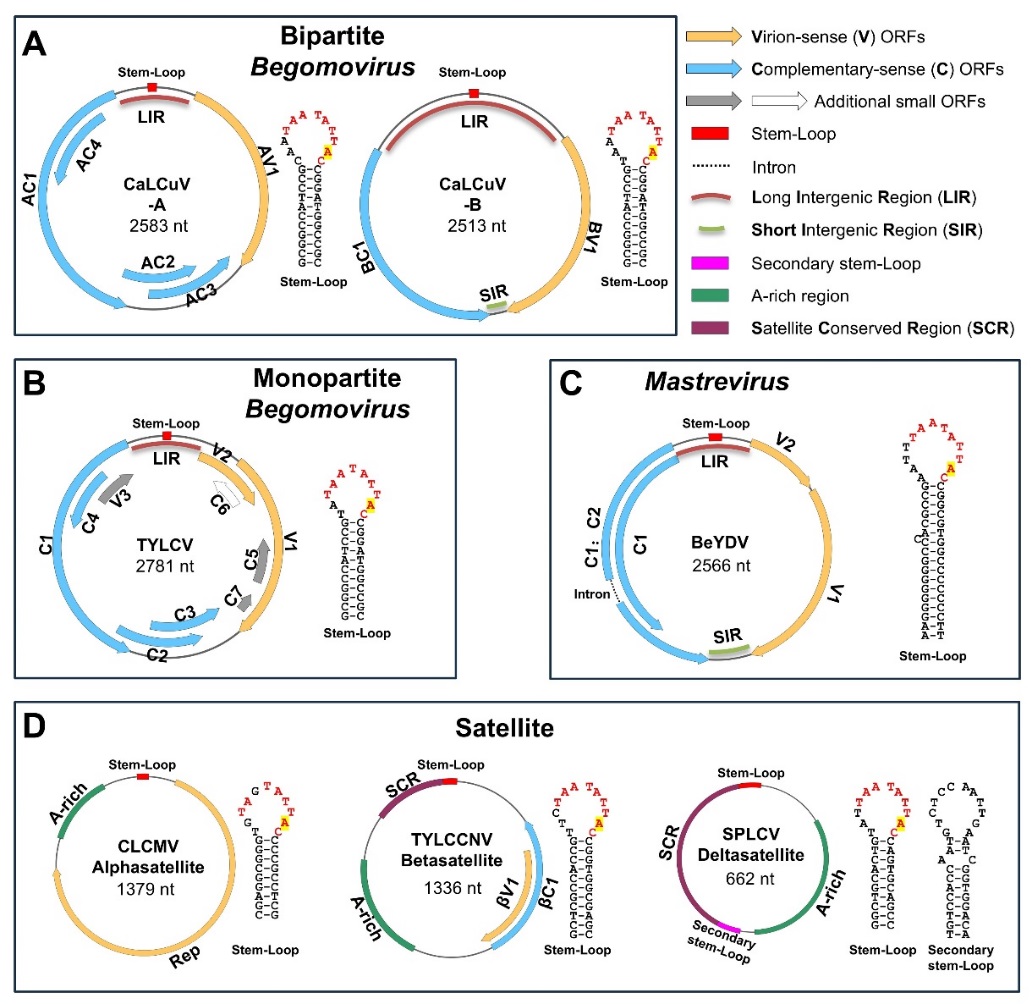
Fig. 1. Schematic overview of geminivirus genomic and satellite DNA.(Image by ZHANG et al.)
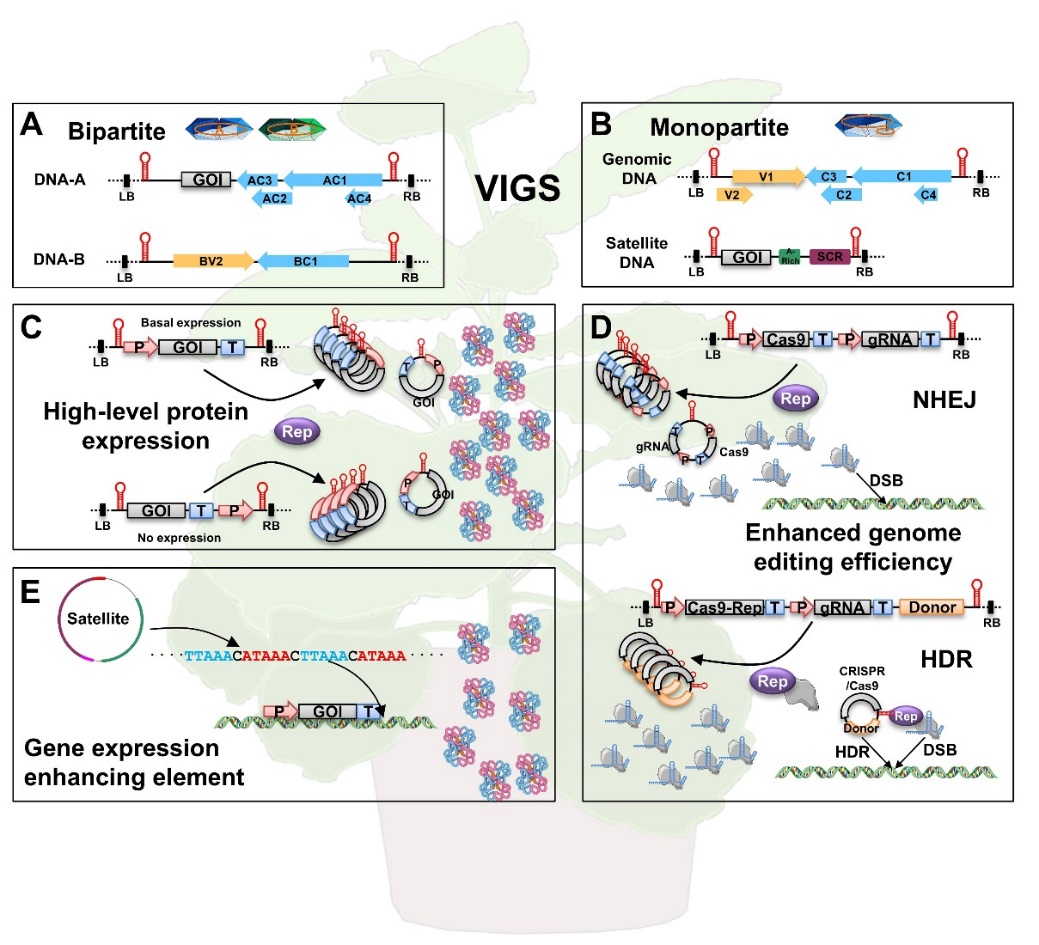
Fig. 2. Geminiviral vectors and their applications.(Image by ZHANG et al.)
File Download: