Calibrating the measurement of “Invisible carbon pool” of soils: A systematic benchmarking of methodologies cross-study synthesis
Comprehensive evaluation of analytical methods establishes a “common ruler” for soil carbon sequestration research
Soil represents the largest carbon reservoir in terrestrial ecosystems. A significant portion of stable soil carbon does not originate directly from plant residues but rather from microbial necromass, forming an “invisible microbial-derived carbon pool”. Accurately quantifying this hidden pool is essential for understanding the long-term stabilization mechanisms of soil carbon and improving the reliability of global carbon cycle models. However, discrepancies in analytical methods across studies have long hindered direct comparisons and limited large-scale, cross-regional synthesis.
Recently, a research team leaded by the South China Botanical Garden of the Chinese Academy of Sciences (CAS), in collaboration with the Shenyang Institute of Applied Ecology of CAS and the University of Maryland, conducted a systematic and comprehensive benchmarking study comparing the two mainstream analytical methods for amino sugars, key biomarkers for tracing microbial necromass in soils. This work provides a clear, quantitative framework for methodological comparison in this field.
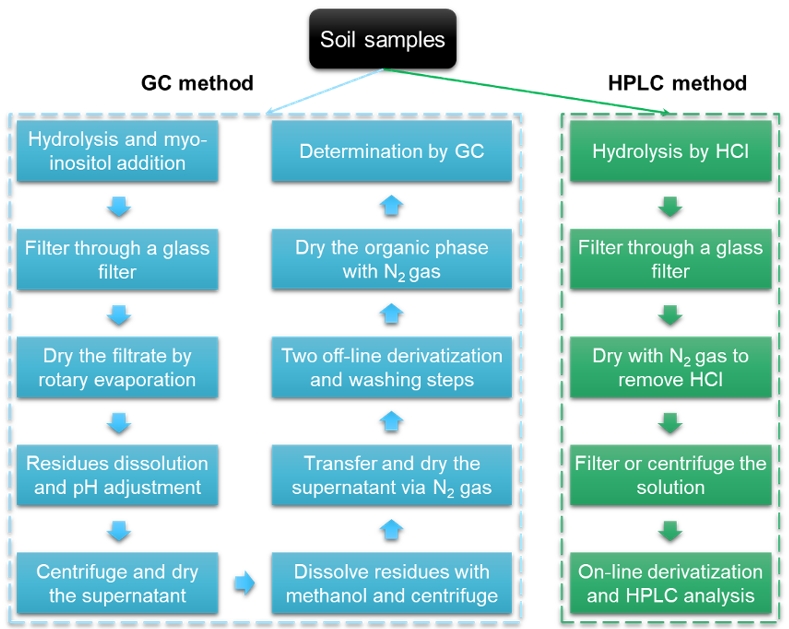
Fig. 1. Workflow comparison of GC and HPLC methods for soil amino sugar analysis.(Image by MOU et al.)
Large-scale and multi‑context comparison resolves the “Method Debate”
Based on 395 field soil samples from diverse climatic zones and ecosystems across North America, the team systematically compared the performance of gas chromatography (GC) and high-performance liquid chromatography (HPLC) in quantifying amino sugars. They further integrated more than 1,900 published datapoints worldwide for a large‑scale meta‑analysis. The results demonstrate high overall consistency and strong correlation between the two methods, indicating the potential for integrating existing datasets. However, under conditions of higher soil organic carbon and total nitrogen content, where the soil matrix is more complex, GC showed greater analytical stability and statistical explanatory power, more accurately reflecting relationships between microbial necromass and soil carbon‑nitrogen gradients. This advantage stems largely from the more rigorous purification steps in GC analysis, which effectively reduce matrix interference.
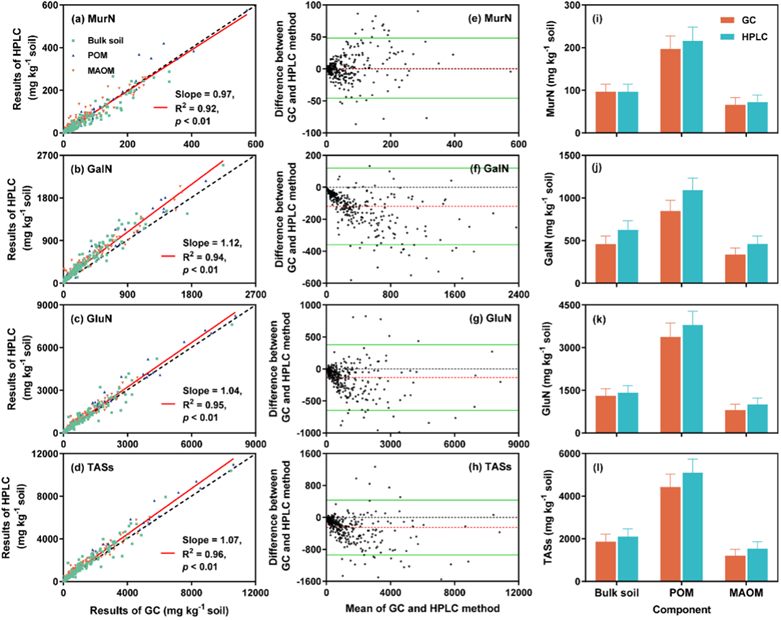
Fig. 2. Consistency between GC and HPLC methods in measuring amino sugars across different soil fractions.(Image by MOU et al.)
High‑precision vs. High‑throughput: distinct advantages for different scenarios
The study emphasizes that neither method is universally superior; rather, each has its appropriate application. GC offers higher chemical resolution and stronger resistance to matrix interference, making it more suitable for mechanistic studies, isotope tracing, and high‑precision quantification. In contrast, HPLC features a simpler workflow, higher throughput, and lower cost, rendering it better suited for large‑scale surveys and long‑term ecological monitoring. “The key is not which method to choose, but how to select appropriately based on research objectives and soil conditions.” the authors note.
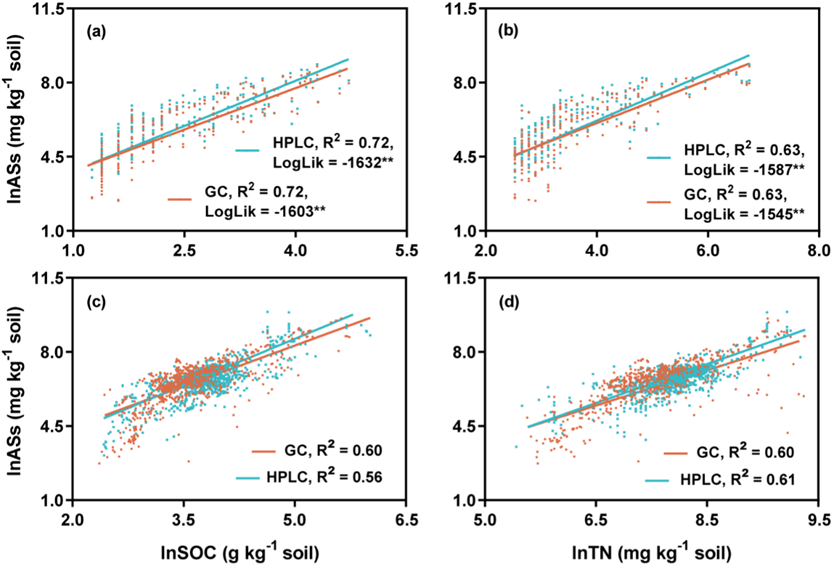
Fig. 3. Context‑dependent differences between GC and HPLC in amino sugar quantification.(Image by MOU et al.)
Significance: building a “Bridge” for global soil carbon sequestration research
This study is not merely a methodological calibration; it serves as a bridge connecting past findings with future research. By establishing a clear quantitative comparison and evaluation framework, the study enables the integration of globally accumulated data on soil microbial necromass over recent decades, laying a scientific foundation for data interoperability across studies. This advance is expected to significantly enhance the predictive capacity of data‑driven and model‑based assessments of soil carbon dynamics, deepen understanding of soil carbon pool stability under global warming, and provide more reliable foundational data for national carbon‑neutrality strategies.
Moreover, the work systematically clarifies the applicability of GC and HPLC across different soil contexts, removing methodological barriers to harmonizing historical data with new observations. This will facilitate cross‑regional and cross‑ecosystem synthesis and improve the representation of microbial processes in global carbon cycle models. The team suggests that future efforts, such as unified calibration systems and inter‑laboratory comparison trials, could further promote the standardization of amino sugar analysis, thereby strengthening scientific support for accurately evaluating soil carbon sequestration and supporting national “Dual Carbon” goals.
The findings have been published in the leading soil science journal Soil Biology and Biochemistry under the title “Benchmarking GC and HPLC for amino sugar analyses across soils”. Postdoctoral MOU Zhijian is the first author, and Prof. LIU Zhanfeng is the corresponding author. The study was supported by the National Natural Science Foundation of China and other projects. Paper link: https://doi.org/10.1016/j.soilbio.2025.110066
File Download: